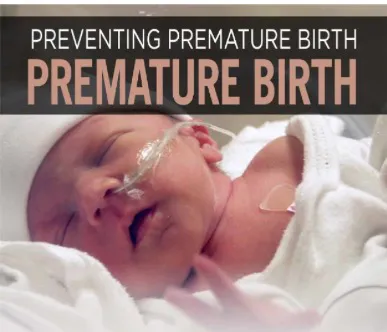
Preterm babies (born before 37 weeks) face complications because their organs—especially the brain, lungs, and liver—are still developing. The **earlier the birth, the higher the risk**.
### Immediate (Short-Term) Complications
| Category | Complications |
|----------|---------------|
| **Breathing** | - **Respiratory distress syndrome (RDS)** – immature lungs lack surfactant Bronchopulmonary dysplasia (BPD)** – chronic lung disease requiring oxygen for weeks-months Apnea of prematurity** – pauses in breathing -20 seconds, often with low heart rate |
| **Brain** | - **Intraventricular hemorrhage (IVH)** – bleeding in-around brain ventricles, common in very-low-birth-weight babies |
| **Heart** | - **Patent ductus arteriosus (PDA)** – abnormal blood flow in the heart |
| **Blood** | - **Anemia** – low red blood cell count , Neonatal sepsis** – blood infection (immune system underdeveloped) |
| **Digestive** | - **Necrotizing enterocolitis** – intestine inflammation , Jaundice** – high bilirubin levels |
| **Eyes** | - **Retinopathy of prematurity (ROP)** – underdeveloped eye blood vessels, can cause abnormal growth-bleeding |
| **Other** | - Trouble maintaining body temperature- Feeding difficulties |
Most preemies need **NICU care** until stable.
### Long-Term Complications
Premature babies have higher risk for:
- **Cerebral palsy** (especially with IVH)
- **Hearing and vision problems**
- **Learning disabilities**
- **Poor growth**
- **Communication-social development issues**
- **Chronic respiratory, cardiac, renal, and endocrine disorders** later in life
### Survival Outlook
- **Good chances** if born after **34 weeks**
- In high-income countries, almost all babies born 32 weeks survive; in low-income settings, **half die** due to lack of warmth, infection-breathing care
- Simple interventions (kangaroo mother care, breastfeeding, caffeine for breathing) substantially reduce mortality
### Immediate (Short-Term) Complications
| Category | Complications |
|----------|---------------|
| **Breathing** | - **Respiratory distress syndrome (RDS)** – immature lungs lack surfactant Bronchopulmonary dysplasia (BPD)** – chronic lung disease requiring oxygen for weeks-months Apnea of prematurity** – pauses in breathing -20 seconds, often with low heart rate |
| **Brain** | - **Intraventricular hemorrhage (IVH)** – bleeding in-around brain ventricles, common in very-low-birth-weight babies |
| **Heart** | - **Patent ductus arteriosus (PDA)** – abnormal blood flow in the heart |
| **Blood** | - **Anemia** – low red blood cell count , Neonatal sepsis** – blood infection (immune system underdeveloped) |
| **Digestive** | - **Necrotizing enterocolitis** – intestine inflammation , Jaundice** – high bilirubin levels |
| **Eyes** | - **Retinopathy of prematurity (ROP)** – underdeveloped eye blood vessels, can cause abnormal growth-bleeding |
| **Other** | - Trouble maintaining body temperature- Feeding difficulties |
Most preemies need **NICU care** until stable.
### Long-Term Complications
Premature babies have higher risk for:
- **Cerebral palsy** (especially with IVH)
- **Hearing and vision problems**
- **Learning disabilities**
- **Poor growth**
- **Communication-social development issues**
- **Chronic respiratory, cardiac, renal, and endocrine disorders** later in life
### Survival Outlook
- **Good chances** if born after **34 weeks**
- In high-income countries, almost all babies born 32 weeks survive; in low-income settings, **half die** due to lack of warmth, infection-breathing care
- Simple interventions (kangaroo mother care, breastfeeding, caffeine for breathing) substantially reduce mortality
Keywords