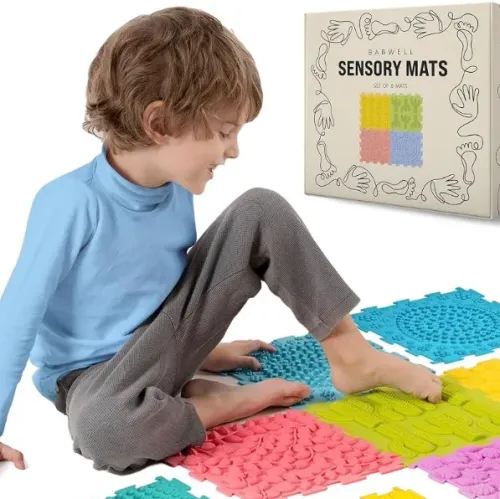
Developing sitting tolerance in autistic children is best done gradually, using motivating activities, sensory supports, and clear visual structure rather than forcing stillness.
## What “sitting tolerance” means (and why it’s hard)
Sitting tolerance is the ability to remain seated and engaged in an activity for a useful amount of time (e.g., for a meal, circle time, or a learning task). Many autistic children find this difficult because of sensory needs (seeking movement, discomfort with certain surfaces), attention differences, motor-postural challenges, or anxiety about demands.
The goal isn’t “perfect stillness, ” but functional participation: being seated safely and able to attend to the task with acceptable movement.
## Core principles that work
Evidence-based programs (especially ABA and occupational therapy–informed approaches) share these ideas:
- **Start at the child’s current level**
Measure how long they can sit now (baseline), even if it’s 30–60 seconds, then build from there.
- **Go slow and small**
Increase time in tiny steps (e.g., +15–30 seconds or +1 minute) only after several successful sessions at the current duration.
- **Make sitting meaningful and rewarding**
Use highly preferred activities and immediate reinforcement (praise, tokens, short access to a favorite toy-game) for staying seated.
- **Use visual supports**
Visual timers, “First–Then” boards (“First sit for 2 minutes, then trampoline”), and clear expectations reduce anxiety and improve cooperation.
- **Keep sessions short and successful**
Many brief, positive trials work better than one long, frustrating one.
## Step-by-step approach you can use at home
### 1) Set up the environment
- Reduce distractions: quiet space, minimal visual clutter, turn off TV-background noise if possible.
- Optimize comfort: try floor cushions, bean bags, wedge cushions, or a therapy ball if chairs are uncomfortable.
- Support posture: feet supported (footrest or chair band), back supported, clothing comfortable (no itchy tags).
### 2) Find the baseline
- Choose a simple, preferred seated activity (stickers, puzzle, sorting beans, coloring).
- Start a timer and note how long the child stays seated and engaged before getting up or becoming very distressed.
- Use that as your starting target (or slightly below it to ensure success).
### 3) Use shaping (gradual increase)
Example plan if baseline is ~2 minutes:
- Day 1–3: Aim for 2 minutes seated with a preferred activity; reinforce heavily at the end.
- When 2 minutes is easy (e.g., 4–5 successful trials in a row), increase to 2:30 or 3 minutes.
- Continue increasing in small steps only when the current duration is consistently successful.
Research using structured activities (e.g., paper mosaic tasks) has shown sitting time can increase from a few minutes to around 9 minutes over multiple short sessions when done systematically.
### 4) Build in reinforcement and visual structure
- **First–Then**: Show “First sit for X minutes, then [preferred activity].”
- **Token-reward system**: Give a token or sticker for each successful sitting trial; trade tokens for a bigger reward.
- **Visual timer**: Let the child see time passing so they know when it ends.
### 5) Use engaging, low-demand activities
Examples that work well for building sitting tolerance:[2]
- Sticker-dot activities inside shapes
- Sorting grains or small objects with a spoon
- Simple matching cards (colors, shapes)
- Threading beads-laces
- 2–4 piece puzzles
- Coloring or tracing lines
- Imitation games (clap–tap sequences)
- Container play (open-close, fill-empty)
- Looking at pictures and talking about them
Keep tasks achievable; the point is to practice sitting, not to make the task hard.
## Sensory and movement supports
Many autistic children need movement to regulate, which actually helps them sit better overall.
- **Before sitting**: 5–10 minutes of “heavy work” or gross motor play (jumping, animal walks, pushing-pulling, climbing) can improve readiness to sit.
- **During sitting**: allow quiet fidgets (therapy putty, stress ball, textured object) and small movements (chair push-ups, foot bands).
- **Between trials**: schedule short movement breaks (1–3 minutes) rather than expecting long, uninterrupted sitting.
- **Alternative seating**: wobble cushions, wedge seats, therapy balls, floor seating with back support can make sitting more comfortable.
## Common pitfalls to avoid
- **Starting too high**: Asking for 10–15 minutes when the child can only do 1–2 minutes leads to failure and avoidance.
- **Forcing stillness**: Punishing all movement can increase anxiety and reduce cooperation; some movement is okay if the child is safe and engaged.
- **Inconsistent expectations**: Changing rules or durations
## What “sitting tolerance” means (and why it’s hard)
Sitting tolerance is the ability to remain seated and engaged in an activity for a useful amount of time (e.g., for a meal, circle time, or a learning task). Many autistic children find this difficult because of sensory needs (seeking movement, discomfort with certain surfaces), attention differences, motor-postural challenges, or anxiety about demands.
The goal isn’t “perfect stillness, ” but functional participation: being seated safely and able to attend to the task with acceptable movement.
## Core principles that work
Evidence-based programs (especially ABA and occupational therapy–informed approaches) share these ideas:
- **Start at the child’s current level**
Measure how long they can sit now (baseline), even if it’s 30–60 seconds, then build from there.
- **Go slow and small**
Increase time in tiny steps (e.g., +15–30 seconds or +1 minute) only after several successful sessions at the current duration.
- **Make sitting meaningful and rewarding**
Use highly preferred activities and immediate reinforcement (praise, tokens, short access to a favorite toy-game) for staying seated.
- **Use visual supports**
Visual timers, “First–Then” boards (“First sit for 2 minutes, then trampoline”), and clear expectations reduce anxiety and improve cooperation.
- **Keep sessions short and successful**
Many brief, positive trials work better than one long, frustrating one.
## Step-by-step approach you can use at home
### 1) Set up the environment
- Reduce distractions: quiet space, minimal visual clutter, turn off TV-background noise if possible.
- Optimize comfort: try floor cushions, bean bags, wedge cushions, or a therapy ball if chairs are uncomfortable.
- Support posture: feet supported (footrest or chair band), back supported, clothing comfortable (no itchy tags).
### 2) Find the baseline
- Choose a simple, preferred seated activity (stickers, puzzle, sorting beans, coloring).
- Start a timer and note how long the child stays seated and engaged before getting up or becoming very distressed.
- Use that as your starting target (or slightly below it to ensure success).
### 3) Use shaping (gradual increase)
Example plan if baseline is ~2 minutes:
- Day 1–3: Aim for 2 minutes seated with a preferred activity; reinforce heavily at the end.
- When 2 minutes is easy (e.g., 4–5 successful trials in a row), increase to 2:30 or 3 minutes.
- Continue increasing in small steps only when the current duration is consistently successful.
Research using structured activities (e.g., paper mosaic tasks) has shown sitting time can increase from a few minutes to around 9 minutes over multiple short sessions when done systematically.
### 4) Build in reinforcement and visual structure
- **First–Then**: Show “First sit for X minutes, then [preferred activity].”
- **Token-reward system**: Give a token or sticker for each successful sitting trial; trade tokens for a bigger reward.
- **Visual timer**: Let the child see time passing so they know when it ends.
### 5) Use engaging, low-demand activities
Examples that work well for building sitting tolerance:[2]
- Sticker-dot activities inside shapes
- Sorting grains or small objects with a spoon
- Simple matching cards (colors, shapes)
- Threading beads-laces
- 2–4 piece puzzles
- Coloring or tracing lines
- Imitation games (clap–tap sequences)
- Container play (open-close, fill-empty)
- Looking at pictures and talking about them
Keep tasks achievable; the point is to practice sitting, not to make the task hard.
## Sensory and movement supports
Many autistic children need movement to regulate, which actually helps them sit better overall.
- **Before sitting**: 5–10 minutes of “heavy work” or gross motor play (jumping, animal walks, pushing-pulling, climbing) can improve readiness to sit.
- **During sitting**: allow quiet fidgets (therapy putty, stress ball, textured object) and small movements (chair push-ups, foot bands).
- **Between trials**: schedule short movement breaks (1–3 minutes) rather than expecting long, uninterrupted sitting.
- **Alternative seating**: wobble cushions, wedge seats, therapy balls, floor seating with back support can make sitting more comfortable.
## Common pitfalls to avoid
- **Starting too high**: Asking for 10–15 minutes when the child can only do 1–2 minutes leads to failure and avoidance.
- **Forcing stillness**: Punishing all movement can increase anxiety and reduce cooperation; some movement is okay if the child is safe and engaged.
- **Inconsistent expectations**: Changing rules or durations
Keywords