Signs of Developmental Delay: When Should Parents Seek Help?
Identifying the signs, understanding your child’s needs and how early support can help
Every child grows in his own way. Some children take their first steps early, some a little longer. Some start to talk early, others use gestures before they learn to use words. These differences are normal in childhood.
But sometimes a child needs additional assistance to learn some skills. If parents are able to identify the early signs of developmental delay it can help them understand what their child needs and help them get the right support at the right time.
You don’t need to have all of the answers as a parent. If you’re worried about something you’ve noticed in your child’s development, asking questions and seeking professional advice is a positive first step.
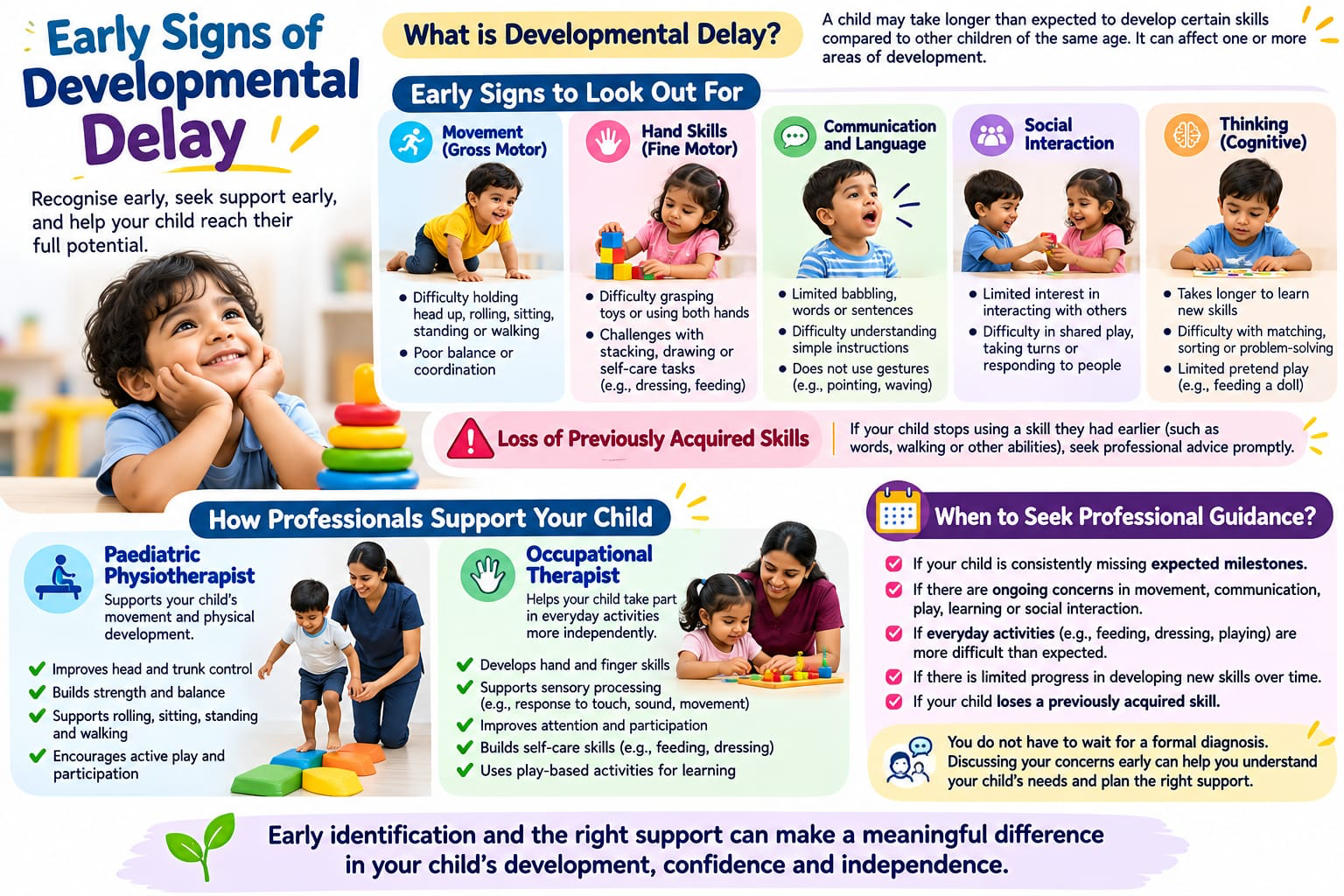
Developmental Delay: What Is It?
Developmental delay is when a child takes longer than usual to develop certain skills compared with the typical developmental patterns for their age.
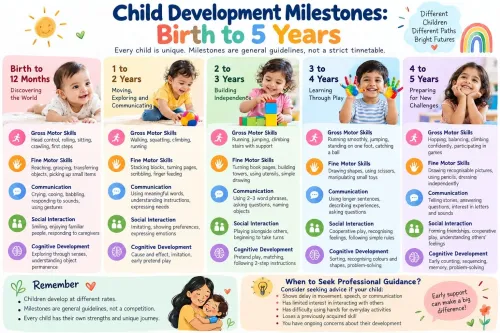
These skills are generally categorized into five groups:
- Gross motor skills: Rolling over, sitting, standing, walking, jumping, balancing.
- Fine motor skills:Reach, grasp, hold toys, draw and use hands for daily activities.
- Communication and language: Listening and understanding sounds, responding to sounds, using gestures, talking and expressing needs.
- Social and emotional development: Relating to caregivers, sharing attention. Interacting with others and expressing emotions.
-Cognitive development:Learning, remembering, exploring, problem solving and understanding the world.
A child may have problems in one or many areas. Developmental differences don’t necessarily mean a child has a specific diagnosis. A good assessment helps professionals to understand the child’s strengths, challenges and support needs.
Early Warning Signs Parents Should Watch For
But parents do spend more time with their children than anyone else, and their observations are particularly valuable. There is no one sign that tells if a child is developmentally delayed, but there are patterns that suggest that more assessment would be helpful.
1.Delayed Movement and Physical Development
Some children may have trouble with head control, rolling, sitting independently, standing or walking within the expected developmental ranges.
Parents may notice stiffness or floppiness that is unusual, lasting balance problems, limited use of one side of the body, or difficulty with coordination during play.
As the child gets older, difficulties with running, jumping, climbing stairs, using playground equipment, or engaging in physical activities appropriate to the child's age may also need to be considered.
A pediatric physiotherapist can evaluate movement, muscle strength, posture, balance, coordination and functional mobility to determine areas where support may be beneficial.
2. Hand skills and problems with daily activities
Many important things children learn, they learn with their hands. Development is supported by reaching for toys, picking up objects, stacking blocks, turning pages and drawing.
Some children may have difficulty holding toys, using both hands together, manipulating objects or developing age appropriate hand skills.
As they develop they may require more help with dressing, feeding, using utensils or participating in play activities that require hand control.
Occupational therapist: Can assess fine motor skills, sensory processing, visual-motor coordination and participation in daily activities. The therapist can then make recommendations for appropriate activities and strategies to promote independence in the child.
3. Speech and communication delays
Communication starts long before a child speaks their first word. Babies communicate by crying, by facial expressions, by looking, by gestures and by sounds.
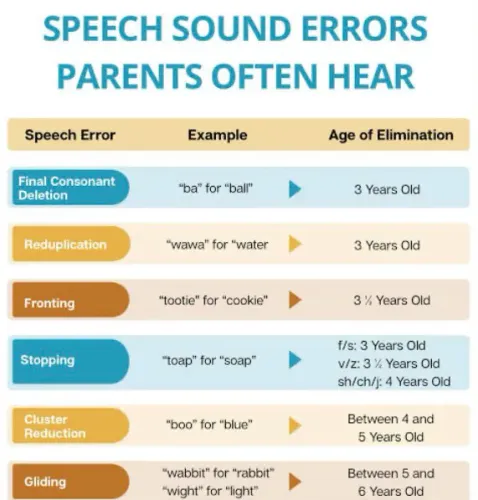
Concerns may be raised if a child does not respond consistently to sounds, uses fewer gestures than expected, has difficulty understanding familiar instructions or shows limited progress in the development of words and sentences.
Some children may also have difficulty sharing or joining in with others, or following conversations.
Speech and language therapists can assess communication, language understanding, expressive language and associated skills. In some cases, further developmental assessment may be suggested as well as a hearing assessment depending on the concerns.
4. Social Interactions and Learning Differences
Parents may notice that their child has problems with playing with others, responding to social interaction, copying actions, or developing play skills.
Other concerns might be a lack of interest interacting with others, difficulty adjusting to everyday routines, or difficulty learning skills by observing and practicing.
There are different explanations for these signs. These should be considered within the framework of overall child development and not use
Keywords