## Potty training in a special school
Toilet training children with special needs works best as an **individualized, consistent school–home program**. Some children may need more time, communication supports, physical adaptations, or help with sensory sensitivities.
### 1. Assess readiness and needs
Before starting, record the child’s toileting pattern for 1–2 weeks:
- When the child urinates or passes stool.
- How long the child stays dry.
- Signs such as hiding, squatting, pulling at a diaper, or becoming restless.
- Constipation, painful stools, urinary infections, or excessive urination.
- Whether the child can sit safely, reach the toilet, and manage clothing with help.
Toilet training may be delayed by constipation, physical disability, communication difficulties, or sensory issues, so involve the child’s pediatrician, occupational therapist, physiotherapist, or speech therapist when needed.
### 2. Make the bathroom predictable
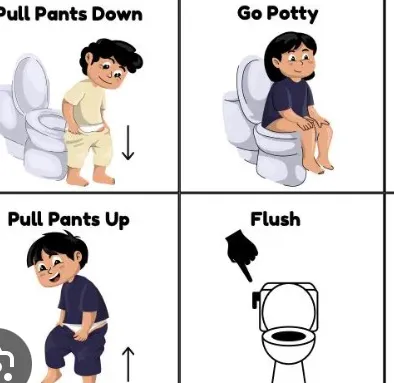
Use the same toilet, routine, words, and visual supports each day. A simple picture sequence can show:
**Go to toilet → Pull clothes down → Sit → Urinate-pass stool → Wipe → Pull clothes up → Flush → Wash hands**
Use photographs or picture symbols if the child does not understand spoken instructions. Keep clothing easy to remove, provide a footstool for stability and proper positioning, and reduce distressing sounds, smells, bright lights, or cold surfaces.
### 3. Use a scheduled routine
Initially, take the child to the toilet at predictable times, based on the toileting diary—for example:
- On arrival at school.
- After meals or drinks.
- Before going outdoors or travelling.
- Before nap time and before going home.
- At intervals appropriate to the child’s usual pattern.
Keep sitting periods short and calm. Never force the child to sit; if they are distressed, stop, calm them, and try again later. Gradually increase the interval when the child remains dry consistently.
### 4. Reinforce every step
Give immediate, specific praise for cooperation—not only for successfully urinating or passing stool:
- “You walked to the toilet.”
- “You pulled your trousers down.”
- “You sat safely.”
- “You put the urine in the toilet.”
Use a preferred reward such as a sticker, token, song, bubbles, or a short activity, according to the child’s interests. Reinforcement should be immediate and gradually reduced as the skill becomes established.
### 5. Teach communication
Accept any reliable way the child can request the toilet:
- Speech or a simple word.
- Sign language.
- Pointing.
- A toilet card or picture.
- An AAC device or button.
- A gesture such as touching the stomach or standing near the bathroom.
Teach the request during scheduled toilet visits, then respond promptly when the child uses it.
### 6. Manage accidents calmly
Do not scold, shame, punish, or make the child clean excessively. Say briefly, “Wet clothes—let’s change, ” involve the child in simple cleanup if appropriate, change clothes, and return to the normal routine. Record the time and circumstances so the schedule can be adjusted.
### 7. Ensure school–home consistency
Create a one-page toileting plan stating:
- The child’s toileting schedule.
- The exact words, signs, or pictures used.
- The prompting hierarchy.
- Rewards and preferred reinforcers.
- Clothing and equipment requirements.
- How accidents and bowel movements are recorded.
- Who is responsible for support and communication with parents.
Review progress weekly and change only one part of the plan at a time. For children with significant physical or developmental needs, the goal may initially be participation in the routine—such as tolerating the bathroom, sitting, communicating, or managing clothing—rather than immediate independent toileting.
Sources
[
Toilet training children with special needs works best as an **individualized, consistent school–home program**. Some children may need more time, communication supports, physical adaptations, or help with sensory sensitivities.
### 1. Assess readiness and needs
Before starting, record the child’s toileting pattern for 1–2 weeks:
- When the child urinates or passes stool.
- How long the child stays dry.
- Signs such as hiding, squatting, pulling at a diaper, or becoming restless.
- Constipation, painful stools, urinary infections, or excessive urination.
- Whether the child can sit safely, reach the toilet, and manage clothing with help.
Toilet training may be delayed by constipation, physical disability, communication difficulties, or sensory issues, so involve the child’s pediatrician, occupational therapist, physiotherapist, or speech therapist when needed.
### 2. Make the bathroom predictable
Use the same toilet, routine, words, and visual supports each day. A simple picture sequence can show:
**Go to toilet → Pull clothes down → Sit → Urinate-pass stool → Wipe → Pull clothes up → Flush → Wash hands**
Use photographs or picture symbols if the child does not understand spoken instructions. Keep clothing easy to remove, provide a footstool for stability and proper positioning, and reduce distressing sounds, smells, bright lights, or cold surfaces.
### 3. Use a scheduled routine
Initially, take the child to the toilet at predictable times, based on the toileting diary—for example:
- On arrival at school.
- After meals or drinks.
- Before going outdoors or travelling.
- Before nap time and before going home.
- At intervals appropriate to the child’s usual pattern.
Keep sitting periods short and calm. Never force the child to sit; if they are distressed, stop, calm them, and try again later. Gradually increase the interval when the child remains dry consistently.
### 4. Reinforce every step
Give immediate, specific praise for cooperation—not only for successfully urinating or passing stool:
- “You walked to the toilet.”
- “You pulled your trousers down.”
- “You sat safely.”
- “You put the urine in the toilet.”
Use a preferred reward such as a sticker, token, song, bubbles, or a short activity, according to the child’s interests. Reinforcement should be immediate and gradually reduced as the skill becomes established.
### 5. Teach communication
Accept any reliable way the child can request the toilet:
- Speech or a simple word.
- Sign language.
- Pointing.
- A toilet card or picture.
- An AAC device or button.
- A gesture such as touching the stomach or standing near the bathroom.
Teach the request during scheduled toilet visits, then respond promptly when the child uses it.
### 6. Manage accidents calmly
Do not scold, shame, punish, or make the child clean excessively. Say briefly, “Wet clothes—let’s change, ” involve the child in simple cleanup if appropriate, change clothes, and return to the normal routine. Record the time and circumstances so the schedule can be adjusted.
### 7. Ensure school–home consistency
Create a one-page toileting plan stating:
- The child’s toileting schedule.
- The exact words, signs, or pictures used.
- The prompting hierarchy.
- Rewards and preferred reinforcers.
- Clothing and equipment requirements.
- How accidents and bowel movements are recorded.
- Who is responsible for support and communication with parents.
Review progress weekly and change only one part of the plan at a time. For children with significant physical or developmental needs, the goal may initially be participation in the routine—such as tolerating the bathroom, sitting, communicating, or managing clothing—rather than immediate independent toileting.
Sources
[
Keywords