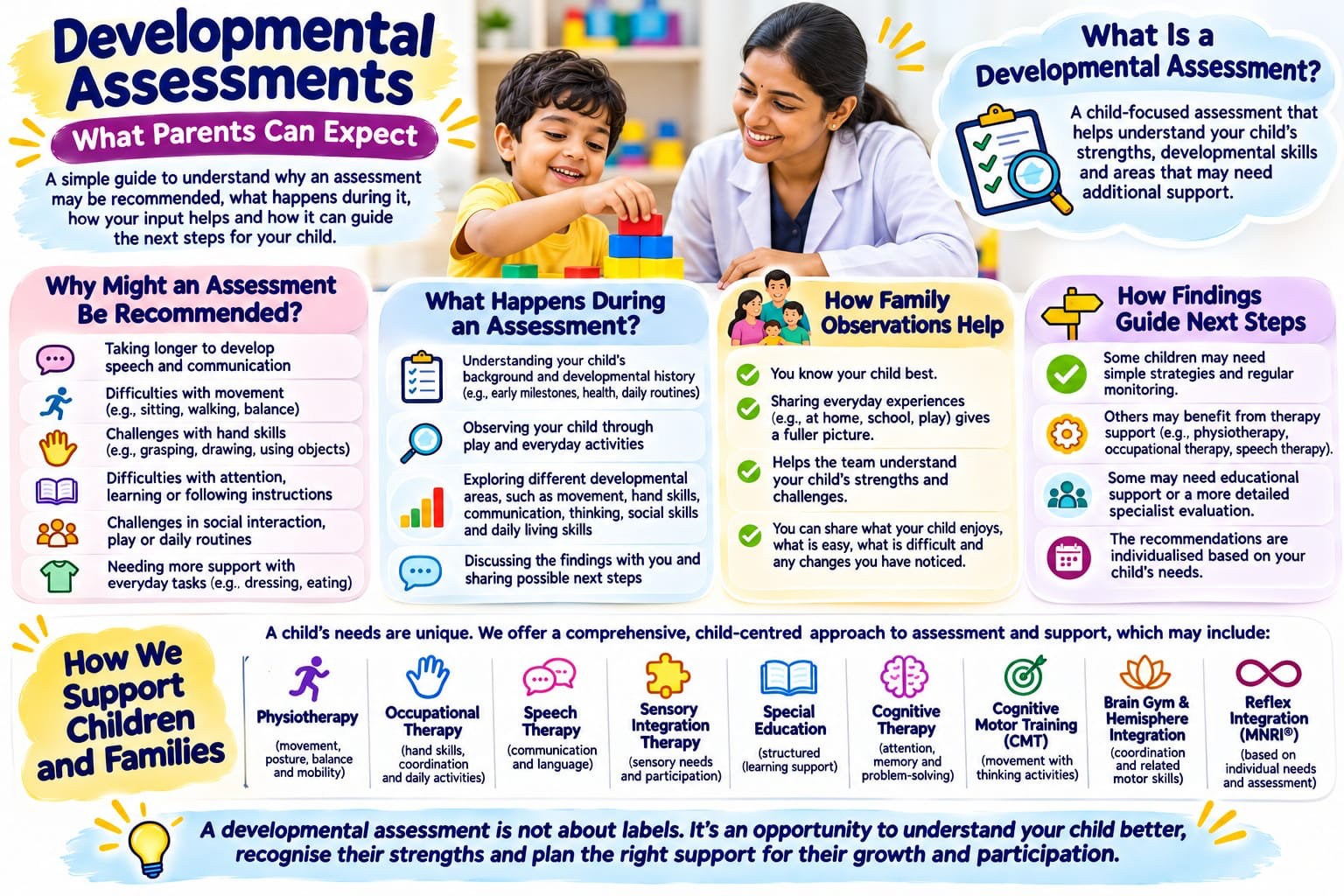
Developmental Assessments: What to Expect from Parents
Every parent wants to see their child grow, learn and hit new milestones. Development involves many exciting moments, such as a baby's first words and steps, and a child's ability to play, communicate and participate in school activities.
But sometimes parents see that their child is slower than expected to develop certain skills or is having more trouble than expected with everyday activities. They might question whether their child needs extra help, or if the differences are just a normal part of growing up.
This is where a developmental assessment can be helpful. It enables parents and professionals to understand what the child can do, identify areas that may require attention and plan appropriate support.
A developmental assessment is not meant to judge a child or compare him or her to someone else. It’s knowing how the child develops and how to help them meet their individual needs.”
When Should You Get a Developmental Evaluation?
Children develop at different rates, but some things you might notice may make a parent or professional suggest an assessment.
e.g. the child could:
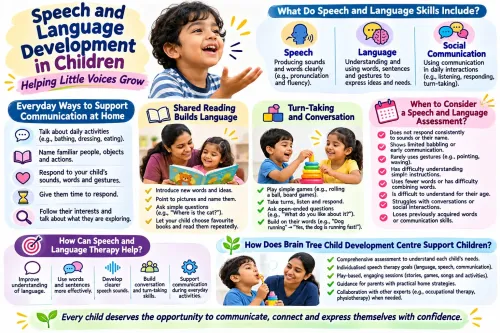
- They are slower to develop speech and communication skills.
- Have trouble following directions or communicating needs.
- Have difficulty sitting, crawling, walking or performing movement activities appropriate for their age.
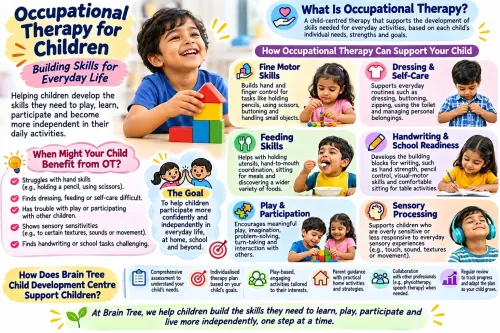
- Have trouble with hand coordination, grasping or using everyday objects.
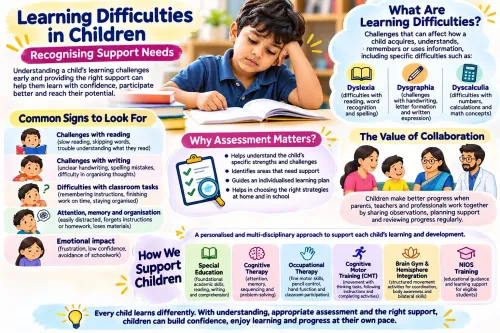
- problems with attention, memory, play or learning.
- Find it hard to interact socially, handle transitions or follow everyday routines.
- Require increased assistance with dressing, eating or other daily living activities.
Parents may be the first to see these differences. In other cases it may be a nursery teacher, pediatrician or therapist that raises a concern.
An assessment may help determine if further evaluation or developmental support may be helpful. It is important not to wait until the difficulties become bigger to talk to a qualified professional about your concerns.
What Happens in a Developmental Evaluation?
“Parents can be nervous before an assessment as they are not sure what will happen. Most of the process is around gathering information, observing the child and recognizing their developmental abilities.
How the assessment is done will depend on the child’s age and concerns and on the professional doing the assessment.
1. Understanding the child's history
The professional may ask questions related to pregnancy, birth history, early milestones, health, past medical problems, and the child’s development.
Parents may also be asked about the child’s daily routines, interests, communication, play and interaction with family members.
2. Observe the child
The professional might look at the way the child plays, moves, communicates, responds to instructions and interacts with others.
Younger children may be less comfortable exploring toys and familiar activities than doing structured tasks. This is why it can be helpful to watch in an informal setting.
3. To know the different areas of development
The areas explored will differ according to the purpose of the assessment but may include:
- Gross motor skills (sitting, standing, walking and balancing)
- Fine motor skills - grasping, drawing and handling objects.
- Communication, speech and language.
- Cognitive abilities such as attention, memory and problem solving.
- Behavior, play and social interaction.
- Daily living skills such as feeding, dressing and personal care.
Professionals trained to do so may also use standardized screening or assessment tools where appropriate.
4. Discussion of Results
Once information is gathered, the professional will share with the family the child’s strengths, areas that may need additional supports and possible next steps.
Important to keep in mind that a developmental screening is not a complete evaluation or a medical diagnosis. Some concerns may require further assessment by a developmental pediatrician, child psychologist or other appropriate specialist.
Why Is It Important What Parents Say?
Parents know their children in ways that professionals are unable to know from one appointment.
A child may act differently in a strange environment. They might be silent in an assessment but talk freely at home. They may do an activity on their own with family members, but need help in the classroom.
This everyday observation is very informative.
Before attending an assessment parents can think about:
- What does the child enjoy doing?
- How does the child express needs and preferences?
- Can the child follow simple directions?
- How does the child relate to other children?
- What are hard things to do at home or at school?
- What new skills did the child learn?
- Were there any skills that the child used to do but no longer does?
Parents may also bring any previous assessment reports, medical records, school observations or
Keywords