Learning Difficulties in Children: Recognising Support Needs
Each child learns differently. Some children can easily identify letters, read simple sentences and complete classroom activities, while others need more time, repetition and individual guidance. When a child consistently has trouble with reading, writing or everyday schoolwork it is worth looking beyond marks and grades to understand what might be making learning difficult.
Learning difficulties don't mean a child is less intelligent or doesn't want to learn. A child could be very strong in many ways and still find some academic skills difficult. Early identification of these challenges and provision of appropriate support can help children feel more confident and comfortable in participating in their educational experience.
What are learning disabilities?
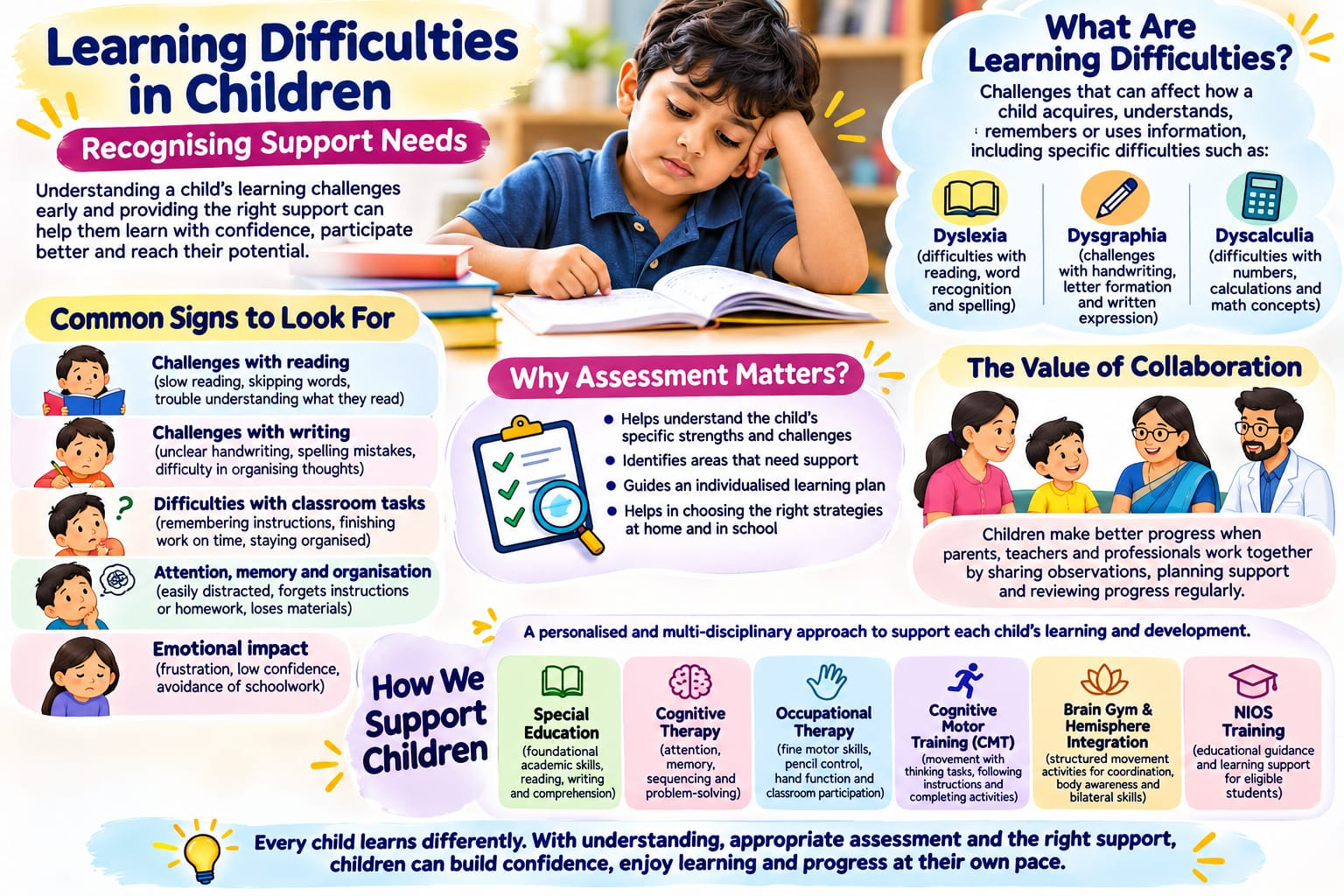
Learning difficulties are problems that impact on the way a child learns, understands, remembers or uses information. Some children have difficulties with specific academic skills, others may require additional support with attention, memory, organization or following instructions.
Some specific learning difficulties identified include:
- Dyslexia: Can impact reading accuracy, fluency, spelling and the ability to associate letters with sounds.
- Dysgraphia: Can impact handwriting, letter formation, spelling and the ability to communicate ideas through written work.
- Dyscalculia: May impact understanding of numbers, number relationships, mathematical concepts and calculations.
These problems can be mixed in different ways. Every child learns differently and it is important not to jump to a diagnosis on a few signs.
Challenges That Parents and Teachers Might Notice
Learning difficulties may show up in different ways as children progress through school. Some signs may become more noticeable as classroom expectations increase.
1. Difficulty in reading
A child might take longer to recognize letters, link sounds to letters, or read familiar words. They may read slowly, stop often, skip words, or have trouble understanding what they just read. They may also be uncomfortable with reading aloud in front of their peers.
2. Challenges with writing
Some children know the answer but it is hard for them to write their thoughts down. They may be printed badly, with different sized letters and many misspellings. They may find it difficult to copy information from the board, organize sentences or complete written work in the time allowed.
3. Problems with classroom activities
Learning is more than reading and writing. The child may have trouble remembering instructions, organizing school supplies, following multi-step directions, or completing tasks independently. They may need instructions to be repeated or extra time to complete activities.
4. Attention, memory and organization
Some children have difficulty remembering sequences, retaining new information, or transitioning from one activity to another. They may forget homework instructions or get distracted in lessons, or lose track of their belongings.
5. Emotional and social problems
Academic problems can hurt a child’s confidence.” Some children may refuse to do homework, get angry, not want to answer questions or compare themselves with their classmates. Others may become withdrawn or lose interest in school activities. It is important to understand these reactions patiently and not to label them as laziness or bad behavior.
Mistakes now and then or slow progress don't automatically indicate a learning difficulty. We should pay attention to persistent patterns and their influence on everyday learning.
Importance of Appropriate Assessment
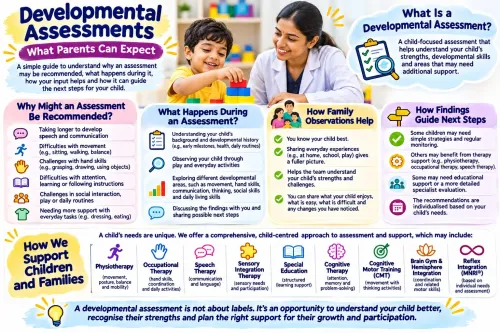
If a child is still having difficulty despite regular teaching and practice, an appropriate assessment can help to identify the specific areas where support is needed.
Assessment may include educational, psychological, developmental, language or occupational therapy evaluations depending on the child’s concerns. A qualified professional can assess relevant skills, understand the child's strengths and identify areas that may need extra support.
The assessment can include:
- Writing, spelling and reading skills.
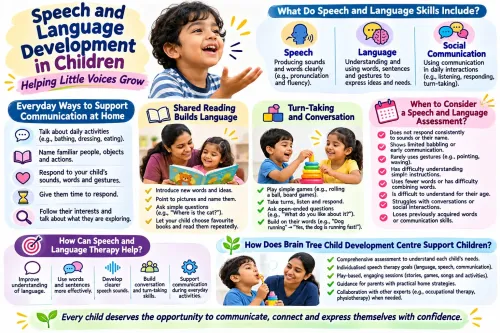
Understanding and expressing language.
- Attention, memory and processing of information.
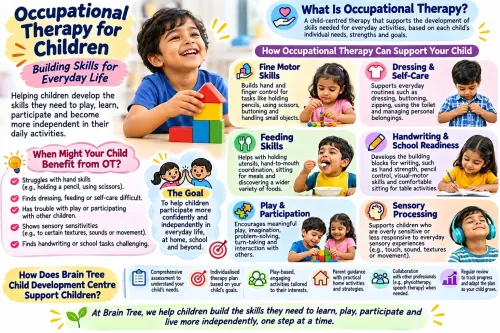
- Fine motor and handwriting-related skills.
- Problem solving and mathematical understanding.
- Participation in daily classroom and functional tasks.
A good assessment helps parents and educators understand not only what the child struggles with, but how the child learns best. It can guide a personalized support plan rather than repeated practice that may not address the underlying difficulty.
Cooperation between parents, teachers and professionals needed
It is good for children when the adults who care for them work together. Parents are able to make observations about home work, daily routines and activities at home.
Keywords