Supporting Therapy Goals at Home: Easy Ways Families Can Help Children Learn Through Daily Activities
A child’s learning and development does not occur solely within the four walls of a therapy room. Some of the most meaningful opportunities for practice are at home – at mealtime, getting dressed, playing with toys, reading a story or spending time with family.
When a child is receiving physiotherapy, occupational therapy, speech therapy or other developmental support, parents often ask how they can continue to help between sessions. Therapists may provide them home activities but they find it difficult to fit everything in a busy family routine.
The good news is that you don’t always need special equipment, long exercise sessions or a separate timetable to support therapy goals at home. With expert advice, everyday activities can become valuable opportunities for children to practice their developing skills.
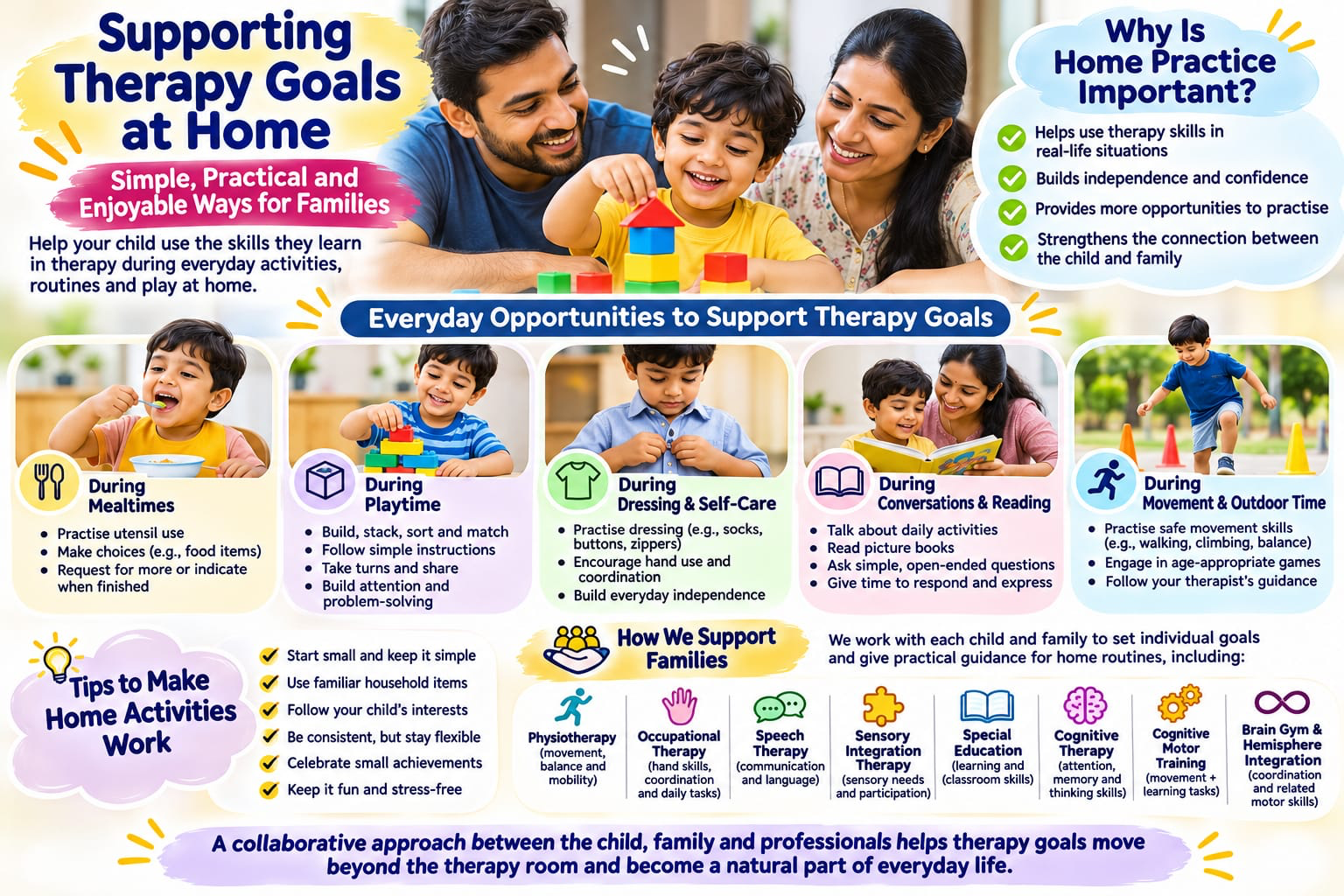
Why Is Practicing At Home Important?
Therapy sessions give children structured opportunities to work toward specific goals. But it is important that children can use these skills in familiar surroundings as well.
For example, a child in occupational therapy who practices holding a spoon might work up to using it at family meals. A child working on communication skills in speech therapy might be encouraged to make choices, ask for toys and join in with everyday conversations at home.
Homework enables children to use the skills they are developing in real life situations. It helps parents understand their child’s abilities, notice small improvements and give encouragement.
The goal is not to turn parents into therapists. It is to assist families in supporting the goals identified by the professionals working with their child.
Incorporating Therapy into Daily Routines
A practical way to support therapy goals is to embed appropriate activities into routines that already occur on a daily basis.
1. At meal times
Mealtimes provide opportunities to practice communication, independence and hand skills.
Parents can encourage the child to: depending on the child’s abilities and professional recommendations
- Hold the spoon or cup with proper support.
- Point to or name foods you know.
- Choose between two foods easily.
- Request more food or let them know when they’re finished.
- Engage in simple mealtime routines.
These everyday interactions may help communication and functional participation. Always follow individual feeding and swallowing advice as appropriate.
2. At playtime
Play is one of the most natural ways for children to explore, communicate and learn.
Parents can include activities like building blocks, puzzles, pretend play, ball games, drawing and sorting objects. These activities can provide opportunities to practice hand coordination, turn taking, problem solving, attention and communication.
For example, parents can encourage the child to ask for another block, name colors, follow a simple instruction or take turns when building a tower.
Choose activities that match the child's developmental level and interests rather than expecting them to complete tasks that are too difficult.
3. During dressing and personal care
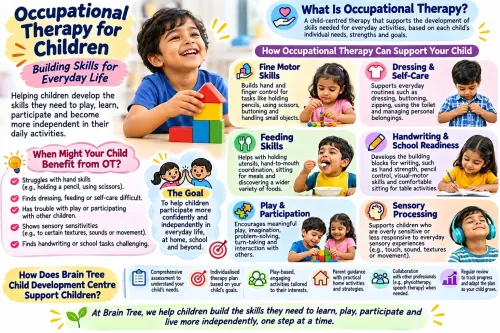
Every day, self-care routines can provide opportunities to foster independence.
Depending on the child's ability parents can encourage participation in activities such as putting on socks, pulling up trousers, fastening large buttons, washing hands and brushing teeth.
Instead of doing each step for the child, give them time to try manageable portions of the activity. When you can, offer to help and cheer them on.
4. In conversation and reading
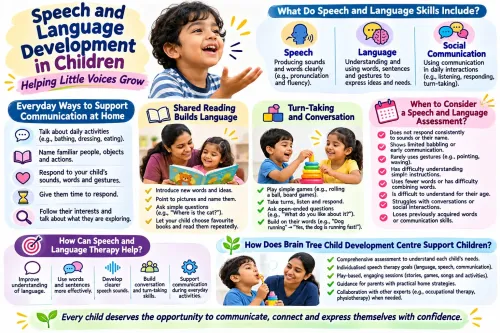
Talking and communicating daily is beneficial for your child’s speech and language development.
Parents can talk about familiar objects, sing songs, read picture books and ask simple questions, and say what they are doing. Allow time for children to respond, either verbally, by gesture, by sign or by use of an appropriate communication aid.
Rather than repeatedly asking a child to name items, try to follow their interests and make conversation fun.
5. During outdoor activities and moving
Selected functional movements can be practised by children with physiotherapy goals in their usual environment.
Activities could be reaching for toys, walking between familiar places, stepping over safe low obstacles, practising balance during play or adapted outdoor games, depending on what the therapist recommends.
The activities must be suitable for the child’s abilities, safety needs and prescribed program. Avoid introducing difficult exercises without professional guidance.
How to Make Home Activities Fun and Useful
Sometimes families feel pressure to do everything recommended perfectly. This can make home practice a stressful experience for both parents and children.
Keywords